Couldn't load pickup availability
CarbonMedical
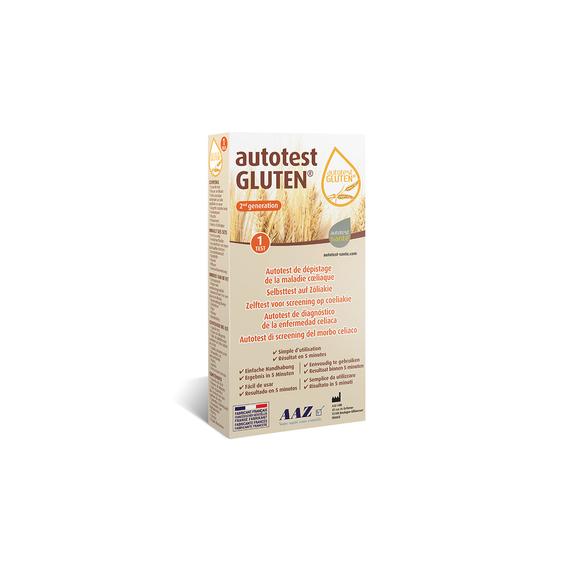
Gluten Intolerance (Celiac Disease) Rapid Test (1 pc/box)
Gluten Intolerance (Celiac Disease) Rapid Test (1 pc/box)
• The price includes 5% VAT.
Under the applicable legislation, Carbon Web Kft. may sell IVD self-test devices online to private individuals in accordance with Decree No. 7/2004 (XI. 23.) of the Minister of Health, and may have the order delivered to the customer’s home by parcel delivery. Please note that by placing your order you waive your right to receive professional information on the use of the self-test. To help you perform the test correctly, we enclose detailed instructions for use in Hungarian, which you will find in the test box and on our website.
Gluten Sensitivity Rapid Test
Coeliac disease is an autoimmune disease that develops as a result of an immune reaction to gluten, a protein found in wheat, barley, rye and some other cereals. When a person with coeliac disease eats foods containing gluten, an immune response is triggered in the body that damages the lining of the small intestine.
As a result of the immune reaction to gluten, the absorptive capacity of the small intestine is reduced and nutrients are not absorbed properly. In the long term, this can lead to nutrient deficiency, vitamin and mineral deficiencies, and other health problems. Symptoms can vary and may affect the digestive system, skin, joints, nervous system and other organs.
Patients with coeliac disease must follow a gluten-free diet, which excludes foods containing gluten from their diet. This includes wheat, barley, rye and products made from them. It is important that people with coeliac disease read food labels carefully to avoid foods with hidden gluten content.
Coeliac disease is a common condition, and its exact cause is not yet fully understood. Heredity may also play a role in the development of the disease, and several family members are often affected. Diagnosis is usually based on a blood test and a biopsy of the intestinal tissue.
Coeliac disease cannot be cured, but by following a gluten-free diet the symptoms disappear and the small intestine can recover. It is important that patients with coeliac disease consult their doctor and dietitian regularly to ensure adequate nutrient intake and controlled management of the disease.
The French-made gluten sensitivity rapid test for home use helps in diagnosing gluten sensitivity.
Gluten Sensitivity Rapid Test Specification
Product name: Rapid test for home use for the detection of gluten sensitivity (coeliac disease)
Sample: blood
Pack size: 1 pc/box
Format: Cassette test
Made in France
Manufacturer: AAZ-LMB, 43, rue de Bellevue, 92100 Boulogne-Billancourt, France, contact@aazlab.fr
Expiry date: 31/03/2027
Contents of the Gluten Sensitivity Rapid Test Kit
- 1 test cassette in a pouch
- 1 vial containing sample diluent
- 1 plastic tube containing a glass capillary tube
- 1 pipette
- 1 fingertip lancet
- 1 disinfectant wipe
- 1 adhesive plaster
- 1 set of instructions for use in Hungarian
Test Procedure
Read the Instructions for Use carefully before performing the test!
Step 1
1. Open the pouch and remove the test cassette. Place it on a clean, flat surface.
2. Unscrew the cap of the vial containing the sample diluent, open the plastic tube and place the capillary tube within easy reach.
Step 2
1. Wash your hands with soap and hot water, then dry them before moving on to the next step.
2. Remove the disinfectant wipe from its pouch, sterilise your fingertip and wait until your finger is dry.
3. Take the lancet and remove the transparent cap. Place its red side on your finger and press firmly until you feel a prick.
4. Squeeze your fingertip to form a large drop of blood for the sample.
Step 3
1. Take the capillary tube and hold it horizontally against the drop of blood until it is completely filled.
2. Place the filled capillary tube into the vial containing the sample diluent and close it with its cap.
3. Shake the vial containing the sample diluent by turning it upside down and back several times until the blood in the capillary tube is completely mixed with the liquid.
4. Remove the cap from the vial containing the sample diluent again and, using the pipette, draw up the diluted sample by squeezing the bulb.
5. Hold the pipette vertically and dispense 3 drops of the diluted sample into the sample well (S) of the test cassette.
Step 4
1. Note the time and wait 5 minutes before reading the result.
2. Apply the adhesive plaster to your finger.
3. Read the result after 5 minutes. After 10 minutes the result is invalid.
Interpretation of Results
Positive
Two lines appear, the control line (C) and the test line (T). One of the two lines may be lighter or darker than the other. You probably have coeliac disease.
Negative
One line appears, the control line (C). The line may be light or dark. You probably do not have coeliac disease.
Invalid
There is no control line (C), or there is neither a control line (C) nor a test line (T). Your home test is inconclusive or invalid.
Reliability of the Gluten Sensitivity Rapid Test
According to a feasibility study of the home gluten sensitivity rapid test performed by non-healthcare professionals, more than 98% of participants using the home test obtained an interpretable result.
Instructions for use